









Indian Agricultural Research Institute (IARI) has highlighted the illicit cultivation of high-yielding basmati varieties, including Pusa Basmati-6 (PB-6), Pusa-1121 and 1509, in Pakistan.
- Blockbuster Pusa-1121 and 1509 Basmati varieties being grown and marketed in Pakistan as “1121 Kainat” and “Kissan Basmati”.
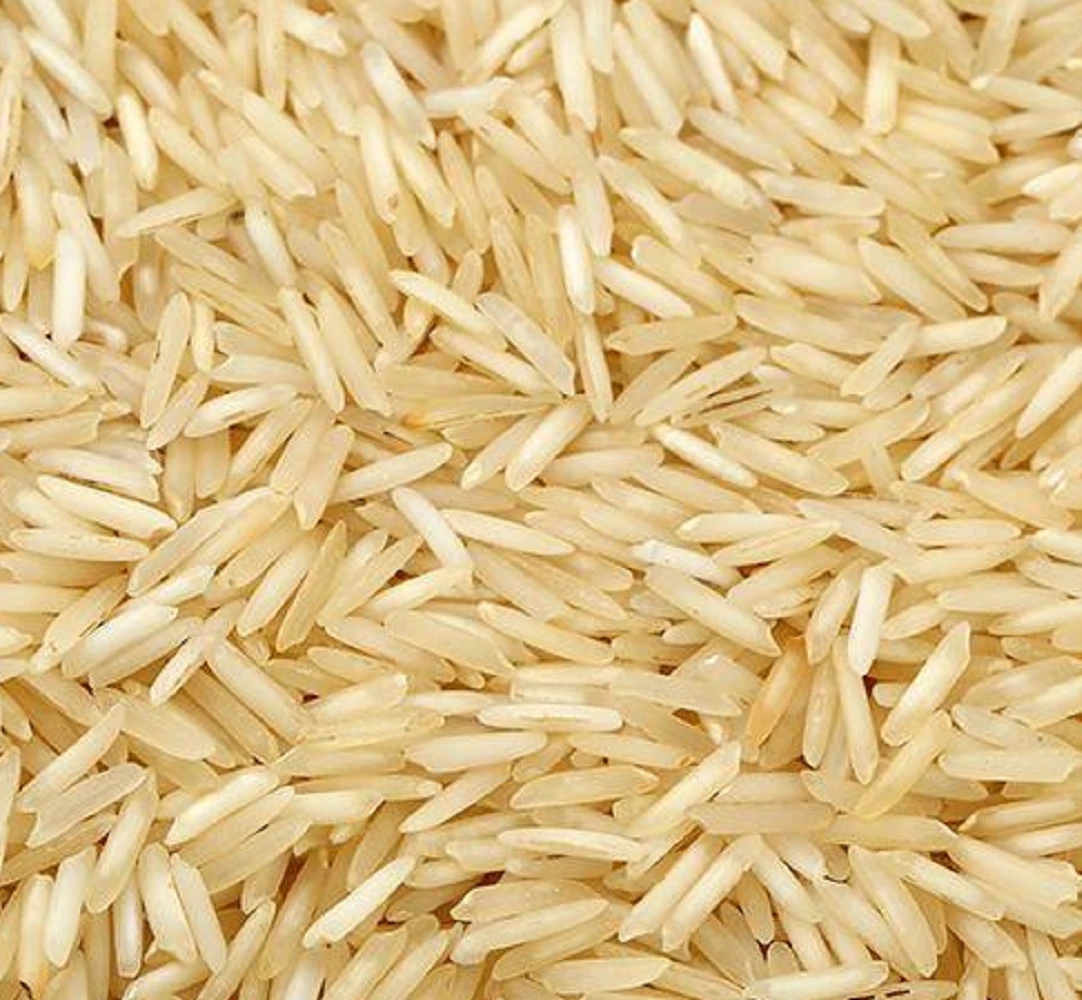
About the high-yielding basmati varieties:
PB-1121:
- PB 1121 is an independently derived Basmati rice variety, evolved through the process of hybridization over a long breeding process.
- It holds the world record for highest kernel elongation on cooking.
- It is a photo-insensitive cultivar that matures earlier than traditional basmati cultivars, requires less water, and yields 19–20 quintals of paddy per acre.
PB-6:
- PB-6 is a high-yielding, semi-dwarf variety of basmati paddy rice that matures in 140–145 days.
- It has medium-sized grains that are attractive and aromatic.
- It is an improvement over Pusa 1121 in its cooking quality, agronomy, and yielding ability.
PB-1509:
- PB-1509 is a variety of basmati rice that matures early, with a seed-to-seed maturity of around 120 days.
- It is the first early maturing basmati paddy variety.
- It is semi-dwarf in stature, with non-lodging and non-shattering habits.
- It is also tolerant to blast and leaf curl, and is extremely fragrant.
- PB-1847, PB-1885, and PB-1886 are improved versions of PB-1509; they resist bacterial blight and rice blast fungal diseases in rice plants.
Legal protection:
- All varieties are notified under the Seeds Act, 1966 for cultivation in the demarcated Geographical Indication area of basmati rice within India, spanning 7 northern states.
- Seeds Act, 1966 regulates the quality of seeds for sale and prohibits the export and import of certain types of seeds.
- They are also registered under the Protection of Plant Varieties and Farmers’ Rights Act, 2001.
- This Act allows only Indian farmers to sow, save, re-sow, exchange or share the seeds of any protected/registered varieties.
- Even they cannot violate the breeder’s rights by selling the seeds in branded packaged and labelled form.
Basmati rice export from India:
- India is the world’s leading exporter of basmati rice, accounting for more than 70% of the world’s production.
- India shipped out 45.61 lakh tonnes (lt) of basmati rice worth $4.79 billion in 2022-23.
- The main export destinations included Saudi Arabia, Iran, Iraq, the United Arab Emirates, and Yemen Republic, with a significant demand for parboiled rice.
- Parboiled rice undergoes partial boiling while still in its inedible husk, resulting in harder grains less prone to breakage during prolonged cooking.
About Basmati rice:
- Basmati rice is a long-grain rice with a soft, fluffy texture and a distinct flavor.
- It is known for its intense aroma, high volume expansion during cooking, and long length of cooked grain.
- It is grown in the Himalayan foothills of northern India, including the states of Punjab, Haryana, Himachal Pradesh, Uttarakhand, Western Uttar Pradesh, Delhi, and Bihar.
- They necessitate extended periods of sunlight, high humidity levels, and a consistent water supply.
- To date, 34 varieties of Basmati rice have been listed under the Seeds Act, 1966.
Ref:Source
| UPSC IAS Preparation Resources | |
| Current Affairs Analysis | Topperspedia |
| GS Shots | Simply Explained |
| Daily Flash Cards | Daily Quiz |