









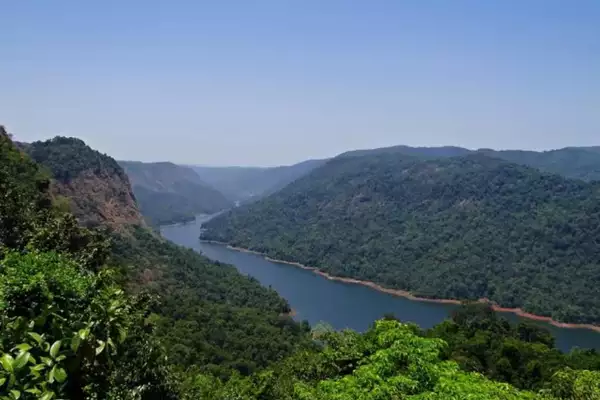
Government recently reissued draft notification to declare over 56,000 sq km of Western Ghats as Eco-sensitive Area (ESA).
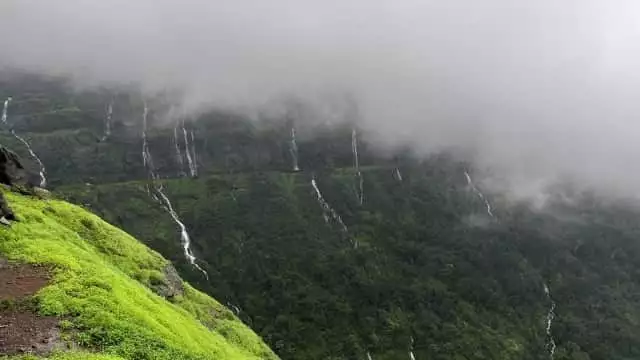
Key Features of the Draft Notification:
- The Central government issued a sixth draft notification declaring 56,825.7 sq km of the Western Ghats as an Ecologically Sensitive Area (ESA) in six states.
- These include Gujarat, Maharashtra, Goa, Karnataka, Kerala, and Tamil Nadu.
- This notification follows a previous draft, which lapsed due to a lack of consensus between the Centre and the states on the extent of ESA.
- The proposed ESA areas are distributed as follows:
- Gujarat: 449 sq km
- Maharashtra: 17,340 sq km
- Goa: 1,461 sq km
- Karnataka: 20,668 sq km
- Tamil Nadu: 6,914 sq km
- Kerala: 9,993.7 sq km
- It provided a 60-day window for submitting objections and suggestions on the draft notification.
- The draft notification process began in 2014 based on recommendations from the High-Level Working Group (HLWG), formed in 2012.
- It was led by space scientist Dr. K Kasturirangan, which reviewed a report by the Madhav Gadgil-led expert committee on ESAs.
- Earlier, another panel to re-examine suggestions by state governments, based on areas like conservation, disaster-prone ecosystems, developmental needs and rights of the region.
About Eco-sensitive Area (ESA):
- It is a designated region that requires special protection due to its significant ecological and environmental value.
- These areas are identified based on their rich biodiversity, unique ecosystems, and the presence of endangered or endemic species.
- The purpose of designating ESAs is to conserve biodiversity, maintain ecological balance, and prevent environmental degradation caused by developmental activities.
Key Features of Ecologically Sensitive Areas (ESAs):
- ESAs are crucial for the conservation of biodiversity, including flora and fauna that are endemic or endangered.
- In ESAs, certain human activities are regulated or restricted to minimize environmental impact.
- This includes restrictions on industrial activities, mining, deforestation, and other activities that can harm the ecosystem.
- The goal of ESAs is to ensure that development within these areas is sustainable and does not compromise the ecological integrity of the region.
- Activities like sustainable agriculture, eco-tourism, and traditional livelihoods are encouraged.
- The designation is based on recommendations from expert committees and is formalized through notifications by the Ministry of Environment, Forest and Climate Change (MoEFCC).
- Local communities living in and around ESAs often play a crucial role in the conservation efforts.
- Their traditional knowledge and practices are integrated into conservation strategies to ensure the protection of these areas.
- Continuous monitoring and management are essential to ensure the protection of ESAs.
- This involves collaboration between government agencies, local communities, and environmental organizations.
Examples of ESAs in India:
- Western Ghats: One of the most well-known ESAs, the Western Ghats is a biodiversity hotspot that spans multiple states. It is home to a wide variety of species and unique ecosystems.
- Himalayan Region: Certain parts of the Himalayan region have been designated as ESAs to protect their fragile ecosystems and biodiversity.
- Andaman and Nicobar Islands: These islands are recognized for their unique biodiversity and are protected as ESAs to prevent ecological degradation.
Ref: Source
| UPSC IAS Preparation Resources | |
| Current Affairs Analysis | Topperspedia |
| GS Shots | Simply Explained |
| Daily Flash Cards | Daily Quiz |
Frequently Asked Question:
What is an Ecologically Sensitive Area (ESA)?
An ESA is a designated region in India that requires special protection due to its significant ecological and environmental value. These areas are identified for their rich biodiversity, unique ecosystems, and the presence of endangered or endemic species.
What activities are regulated in ESAs?
Activities such as industrial operations, mining, deforestation, and other activities that could harm the ecosystem are regulated or restricted.
Which are key ESAs in India?
Western Ghats, Himalayan region, and Andaman & Nicobar Islands are key ESAs in india.