









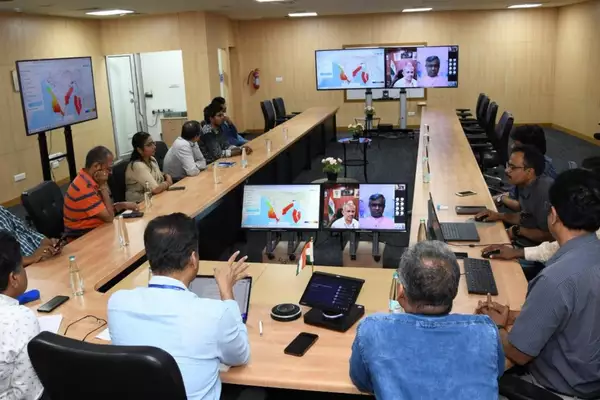
The Indian National Centre for Ocean Information Services (INCOIS) recently launched the ‘Integrated Ocean Energy Atlas,’ highlighting the potential of marine energy resources within the Indian Exclusive Economic Zone (EEZ).

About the Integrated Ocean Energy Atlas:
- Purpose: To identify and showcase areas with high potential for energy generation from various marine energy resources.
- Goal: To facilitate the harnessing of rich energy resources available in the Indian EEZ.
Key Features of the Atlas:
- Energy Resources Covered:
- Marine Meteorological Energy:
- Solar energy
- Wind energy
- Hydrological Energy:
- Wave energy
- Tidal energy
- Current energy
- Ocean thermal energy
- Salinity gradient energy
- Marine Meteorological Energy:
- Energy Estimates: INCOIS has estimated an integrated ocean energy potential of approximately 9.2 lakh TWh per annum within India’s EEZ.
- Data Presentation: The Atlas includes annual, monthly, and daily energy estimates visualized through a WebGIS interface at a resolution of 5 km grid.
About INCOIS:
- Establishment: INCOIS was established as an autonomous body under the Ministry of Earth Sciences in 1999.
- Mission: To provide ocean data, information, and advisory services to various stakeholders including society, industry, government, and the scientific community through sustained ocean observations.
- Methodology: Achieves its mission through sustained ocean observations.
Ref: Source
| UPSC IAS Preparation Resources | |
| Current Affairs Analysis | Topperspedia |
| GS Shots | Simply Explained |
| Daily Flash Cards | Daily Quiz |
Frequently Asked Question:
What is the purpose of the Integrated Ocean Energy Atlas?
The Atlas aims to identify areas within India’s EEZ with high potential for generating marine-based renewable energy.
What energy resources are covered by the Ocean Energy Atlas?
The Atlas covers solar, wind, wave, tidal, current, ocean thermal, and salinity gradient energy.
How much energy potential does the Indian EEZ hold, according to the Atlas?
INCOIS estimates an energy potential of approximately 9.2 lakh TWh per annum within India’s EEZ.
How is the data presented in the Integrated Ocean Energy Atlas?
The data is presented through a WebGIS interface at a 5 km grid resolution with annual, monthly, and daily energy estimates.
What is the role of INCOIS in ocean data management?
INCOIS provides ocean data, information, and advisory services to various stakeholders through sustained ocean observations.