









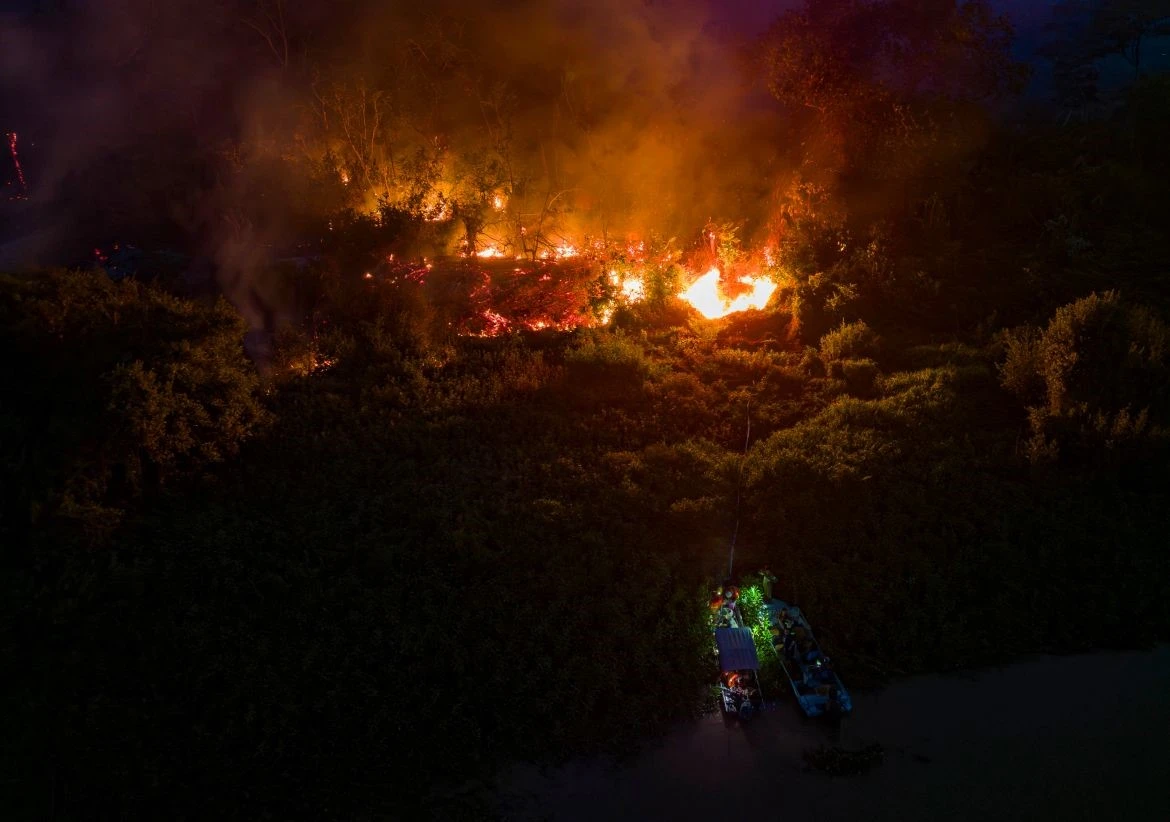
Brazil’s Pantanal wetlands are currently facing devastating wildfires.
About Pantanal Wetland:
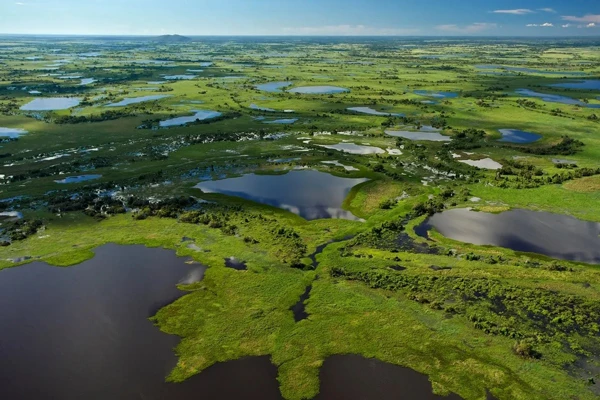
- The Pantanal is the world’s largest tropical wetland, primarily located in Brazil and extending into Bolivia and Paraguay.
- It covers an estimated area of 140,000 to 195,000 square kilometers.
- Known as a seasonal floodplain, it is mainly influenced by the Paraguay River System.
- During the rainy seasons, about 80% of the Pantanal is submerged, creating vast flooded grasslands.
- The region boasts the highest concentration of some wildlife species in South America, including jaguars and caimans, and is rich in aquatic plants and diverse animal species.
- The Pantanal holds designations as a UNESCO World Natural Heritage Site and a Biosphere Reserve.
- It includes two sites recognized under the Ramsar Convention on Wetlands and is protected under the Brazilian Constitution as a National Heritage, designated for ecologically sustainable use.
- However, less than 5% of the Pantanal benefits from formal protection, and about 95% is privately owned.
- The wetlands face numerous threats such as cattle grazing, pollution from untreated waste, pesticide runoff, and unsustainable infrastructure development.
- Brazil’s Pantanal, an ecological treasure, continues to face ongoing threats that jeopardize its rich biodiversity and ecological health.
- Conservation efforts are essential to preserve this unique environment for future generations.
| UPSC IAS Preparation Resources | |
| Current Affairs Analysis | Topperspedia |
| GS Shots | Simply Explained |
| Daily Flash Cards | Daily Quiz |