









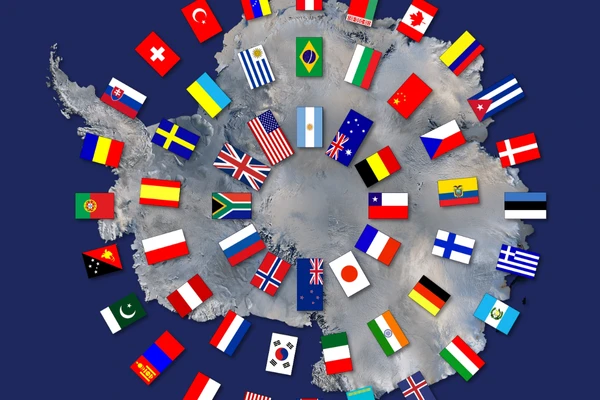
The Ministry of Earth Sciences (MoES), through the National Centre for Polar and Ocean Research (NCPOR), will host the 46th Antarctic Treaty Consultative Meeting (ATCM 46) and the 26th Meeting of the Committee for Environmental Protection (CEP 26).

[Ref: TOI]
About Antarctic Treaty:
- Twelve countries initially signed the Antarctic Treaty in Washington D.C. in December 1959.
- The treaty designated Antarctica as a demilitarized zone, focusing exclusively on scientific research.
- The original signatories included Argentina, Australia, Belgium, Chile, France, Japan, New Zealand, Norway, South Africa, USSR, the UK, and the US.
- India’s involvement began in 1983 when it signed the treaty. Additionally, India enacted the Indian Antarctic Act in 2022.
- Antarctica is defined by the treaty as all lands and ice shelves south of the 60°S latitude.
Key Provisions of the Antarctic Treaty
- The treaty mandates strict prohibition on military activities, nuclear tests, and the disposal of radioactive waste for peaceful purposes.
- It encourages freedom of scientific research and promotes international cooperation.
- Territorial sovereignty is neutralized within the treaty, which prohibits new claims, expansion of existing claims, and freezes disputes over territories.
Key Protocol and Conventions Related to the Antarctic Treaty
- The cornerstone is the 1959 Antarctic Treaty itself.
- Subsequent conventions include the 1972 Convention for the Conservation of Antarctic Seals.
- The 1980 Convention on the Conservation of Antarctic Marine Living Resources.
- The 1991 Protocol on Environmental Protection to the Antarctic Treaty enhances environmental safeguards.