









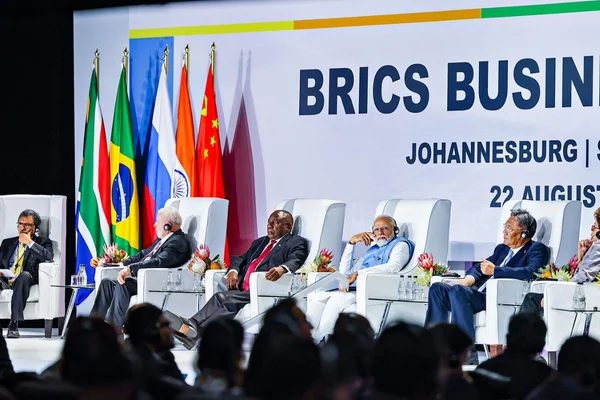
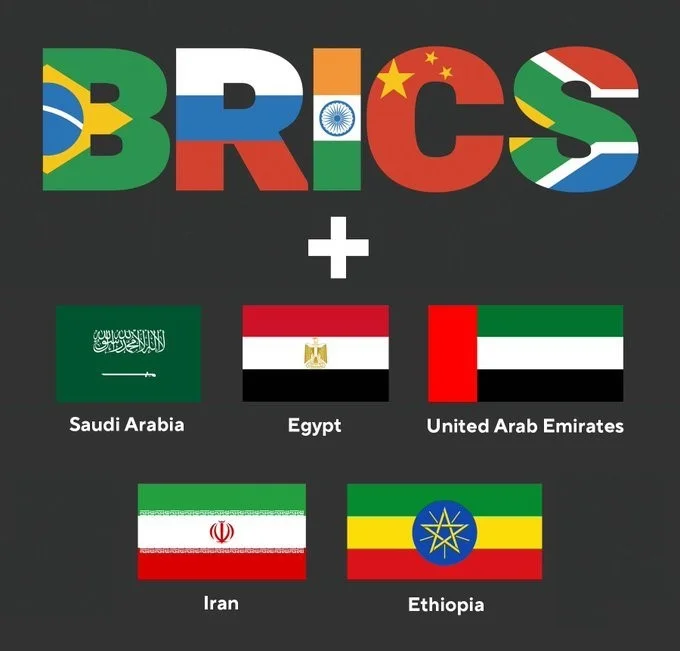
Recently, Saudi Arabia, Iran, Egypt, Ethiopia and the United Arab Emirates have formally accepted the invitation to join the BRICS, and become its full members.
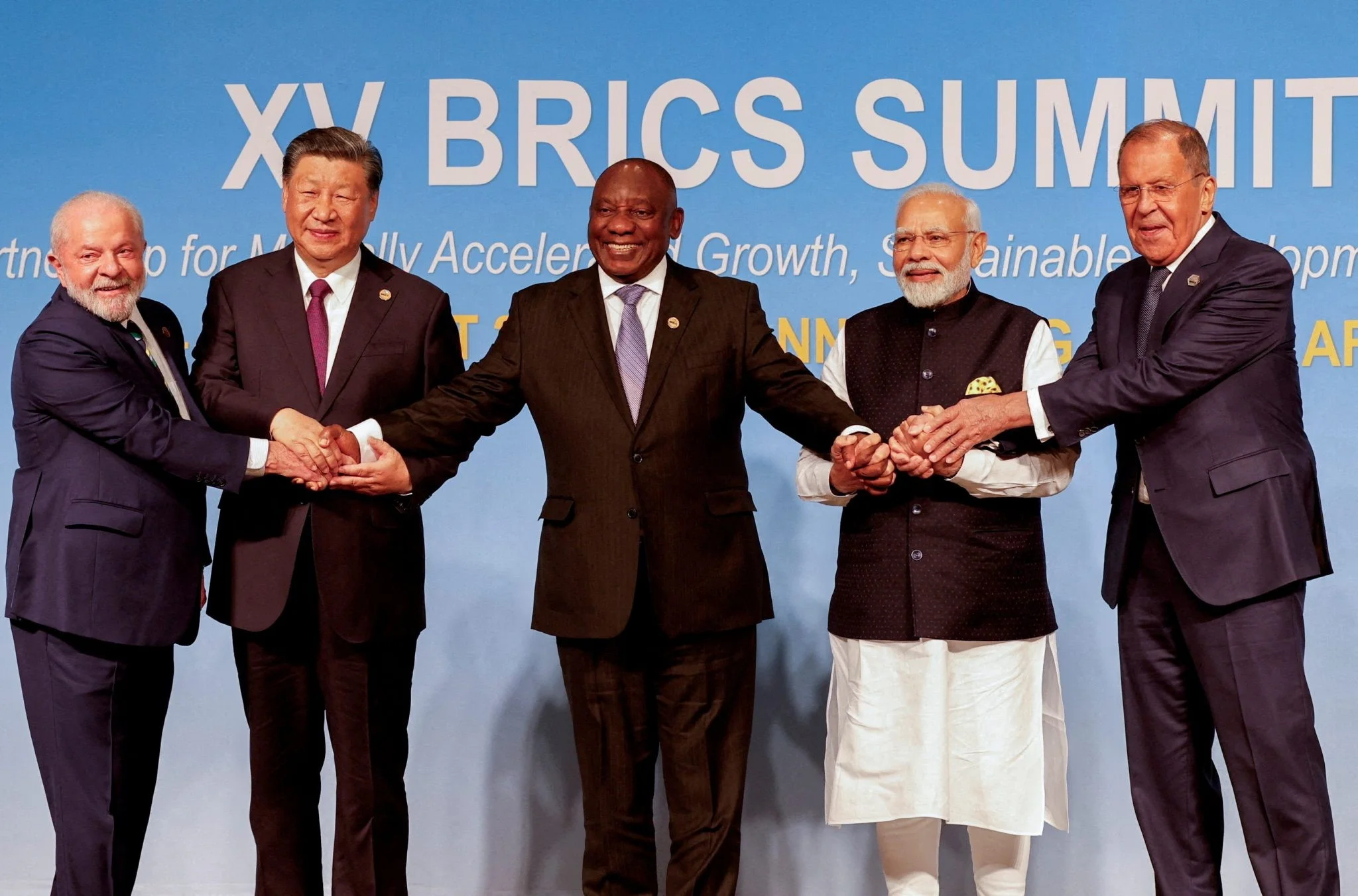
Recent developments of BRICS:
- Russia is set to chair BRICS in 2024, with its motto being “Strengthening Multilateralism for Equitable Global Development and Security.”
- In 2023, South Africa held the BRICS chairmanship.
- The Foreign Ministers of BRICS are working on a “BRICS partner country model” to include 17 nations that were not accepted as full members initially.
- BRICS is developing a framework to facilitate the use of local currencies for inter-BRICS trade.
Significance of BRICS Expansion:
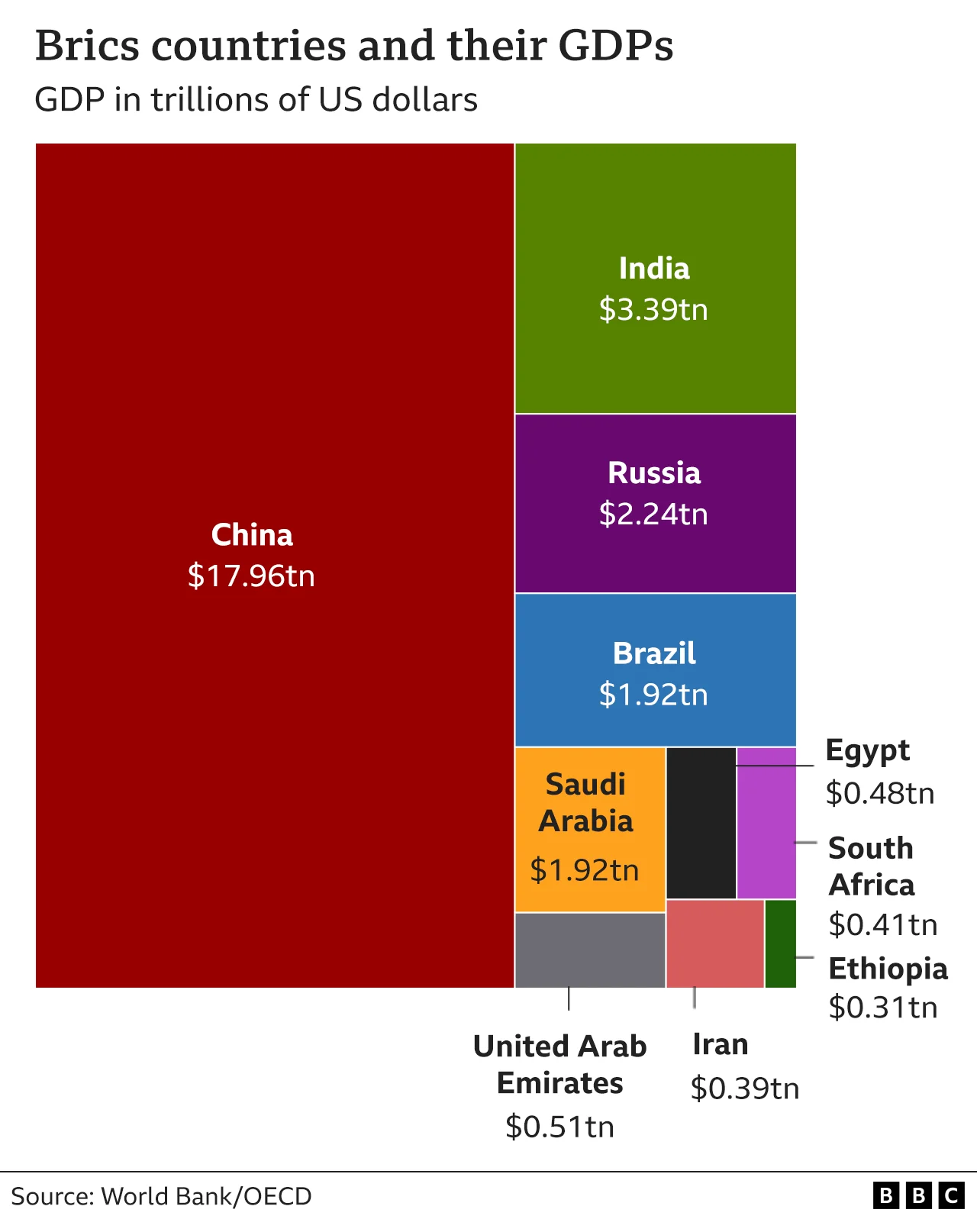
- The expanded BRICS has a combined economy exceeding $28.5 trillion, representing about 28% of the global economy.
- With a combined population of approximately 3.5 billion, the expanded BRICS constitutes almost half of the world’s population.
- It aligns with India’s emphasis on Global South cooperation, fostering collaboration among member nations.
- It contributes to a multipolar world, by countering the dominance of developed nations in groups like the G7.
- It challenges the relevance of existing international organizations like UNSC (United Nations Security Council) and WTO (World Trade Organization), paving the way for alternative groupings like BRICS.
Challenges with BRICS Expansion:
- Economic, political, demographic, and geographic diversity may limit collective effectiveness.
- Existing tensions among members, such as India and China, pose challenges to cohesion.
| UPSC IAS Preparation Resources | |
| Current Affairs Analysis | Topperspedia |
| GS Shots | Simply Explained |
| Daily Flash Cards | Daily Quiz |