









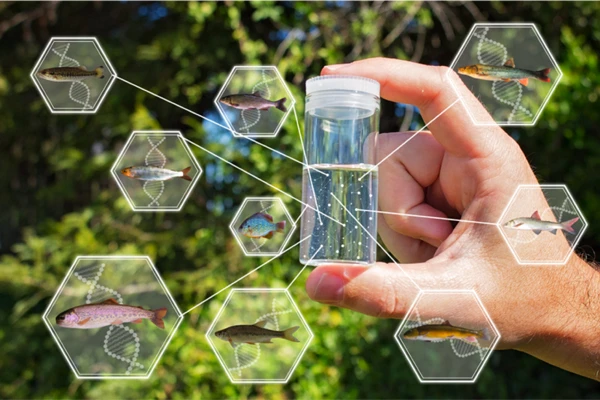
Researchers have highlighted the potential of using environmental DNA (eDNA) for freshwater biodiversity monitoring.

About Environmental DNA (eDNA):
- Environmental DNA (eDNA) refers to DNA released into the environment by organisms.
- eDNA comes from faeces, mucous, gametes, shed skin, hair, and carcasses.
- It exists in cellular and extracellular forms in aquatic environments.
- eDNA is affected by UVB radiation, acidity, heat, and nucleases.
- It lasts 7–21 days in water.
Applications of eDNA:
- eDNA helps detect species presence.
- It is used to assess biodiversity in ecosystems.
- eDNA works in both aquatic and terrestrial environments.
- It is more reliable, accurate, and cost-effective than traditional methods.
- eDNA informs the IUCN Red List of Threatened Species and other conservation tools.
| UPSC IAS Preparation Resources | |
| Current Affairs Analysis | Topperspedia |
| GS Shots | Simply Explained |
| Daily Flash Cards | Daily Quiz |