









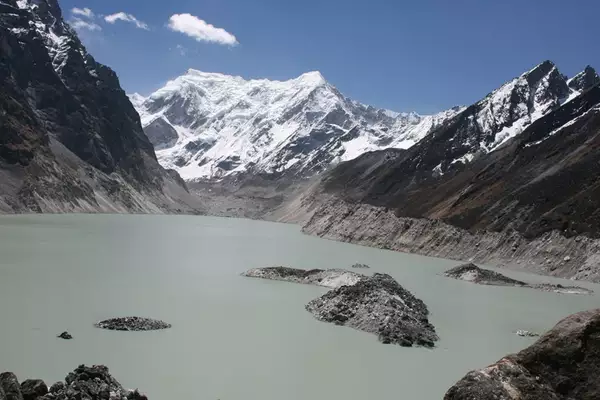
Due to the Glacial Lake Outburst Flood (GLOF) disaster in Sikkim last year, central government has recently initiated the establishment of Early Warning Systems (EWS) for glacial lakes across the Indian Himalayan Region.
- A central team recently visited Tenchungkha lake in the Lachung area of Sikkim. This is the first lake out of the sixteen identified for study.
About the GLOF EWS Mission
- Objective: The mission aims to study and monitor 16 critical lakes in Sikkim as part of a broader initiative to cover 188 critical lakes across the Indian Himalayan Region (IHR).
- Authorities Involved: The mission is led by the National Disaster Management Authority (NDMA) in collaboration with the Indian Space Research Organisation (ISRO) and State Disaster Management Authorities.
Identification and Scope:
- Critical Lakes Identified: The 188 critical lakes are located across several states including Uttarakhand, Arunachal Pradesh, Sikkim, Himachal Pradesh, Ladakh, Jammu and Kashmir, Meghalaya, Manipur, and Nagaland.
- Focus: The mission emphasizes mapping glacial lakes, assessing the risk of GLOF events, and installing advanced early warning systems to prevent future disasters.
Significance of the Mission:
- Impact of Glacial Retreat: Increased temperatures have led to the formation and expansion of large glacial lakes, heightening the risk of GLOF events.
- Risk Management: The mission aims to enhance hazard assessment and risk management practices to address the evolving threats posed by these glacial lakes.
Strategic Goals:
- Mapping and Monitoring: The mission will provide detailed mapping of GLOF-prone lakes and monitor their conditions.
- Advanced Warning Systems: Installation of early warning systems is a key component to ensure timely alerts and reduce the impact of potential GLOF events.
About Glacial Lake Outburst Flood (GLOF):
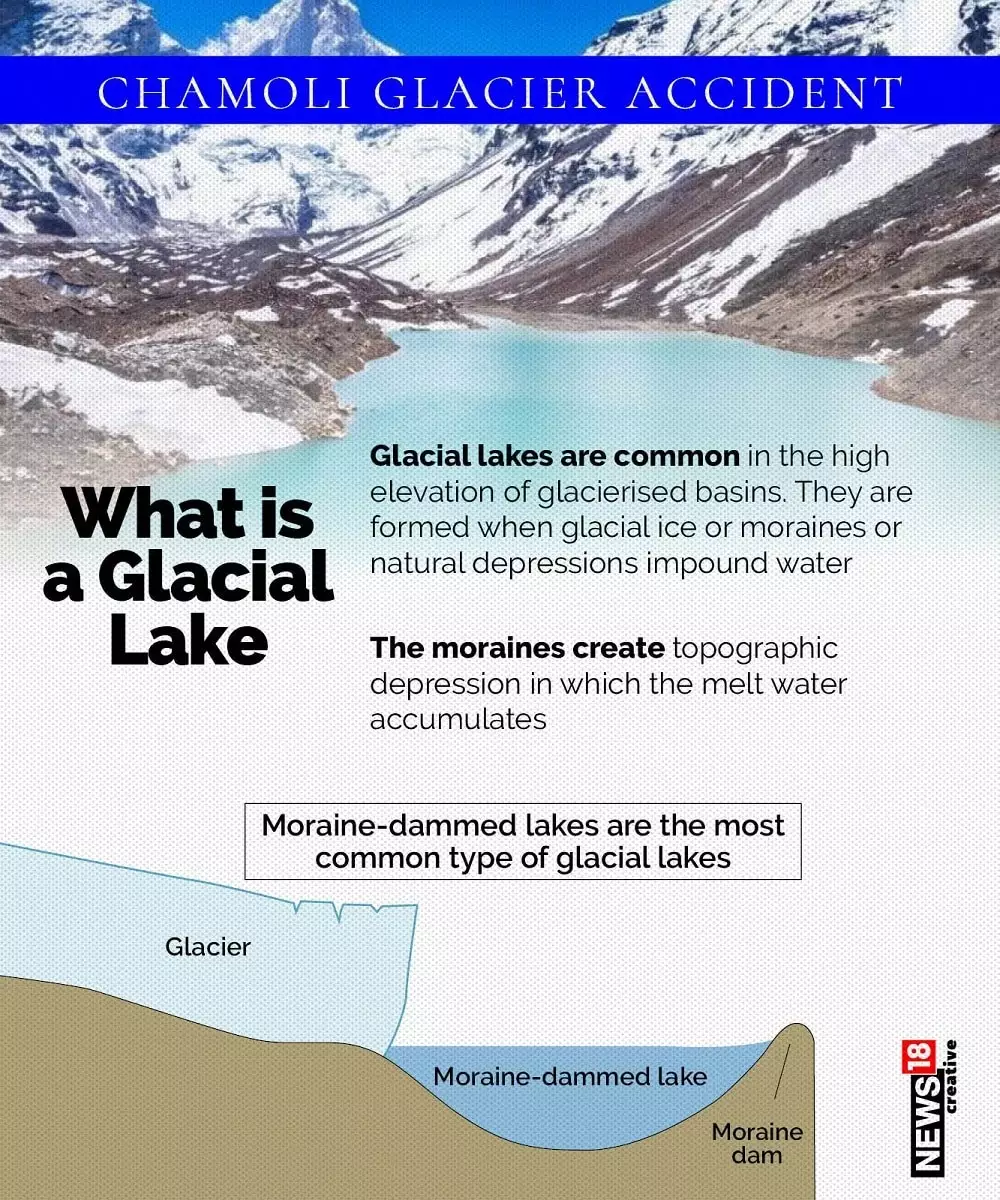
- A Glacial Lake Outburst Flood (GLOF) is a sudden release of meltwater from a moraine- or ice-dam glacial lake due to dam failure.
- This often leads to catastrophic downstream flooding, causing significant geomorphic and socioeconomic impacts.
Main Features of GLOFs:
- Sudden Releases: GLOFs involve abrupt, and sometimes cyclic, releases of water from glacial lakes.
- Rapid Events: The floods are typically rapid, occurring over a span of hours to days.
- Large Downstream Discharges: They result in a substantial increase in downstream river discharges, often by an order of magnitude.
Formation of GLOF:
- Moraine-Dammed Lakes:
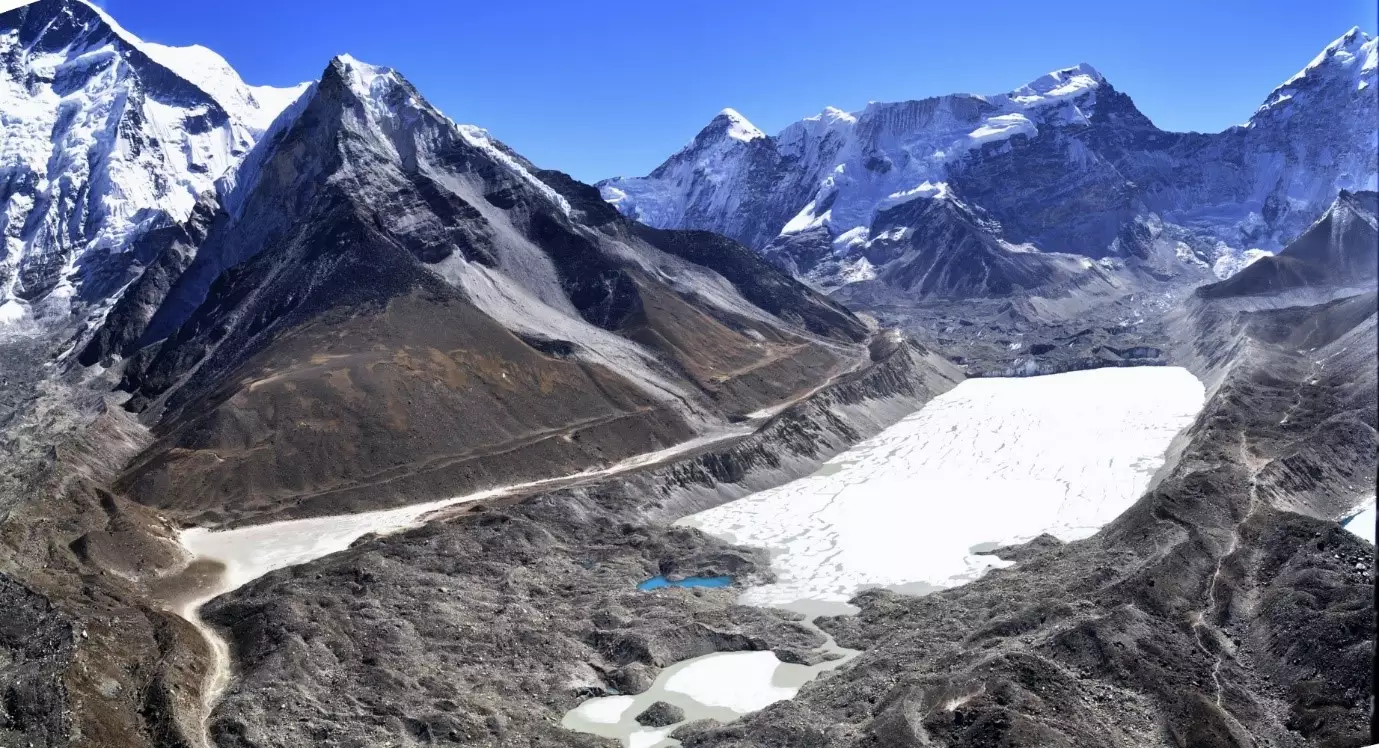
- Formation: Occur when a glacier retreats from a moraine, allowing water to collect in the topographic low between the glacier margin and the moraine.
- Characteristics: These lakes typically form from the retreat of mountain glaciers and were common during the Little Ice Age.
- Example: Imja Tsho glacial lake in Nepal.
- Ice-Dammed Lakes:
- Formation: Occur when a glacier blocks the drainage of meltwater, either due to glacier advance or thickening.
- Characteristics: The growth of ice-dammed lakes is closely linked to glacier mass balance and climatic conditions.
- Locations:
- Where a tributary valley is blocked by a trunk glacier.
- Where a glacier advances across a main trunk valley.
- In openings between the glacier margin and the ice-free valley sides.
- At the confluence of two glaciers.
Ref: Source
| UPSC IAS Preparation Resources | |
| Current Affairs Analysis | Topperspedia |
| GS Shots | Simply Explained |
| Daily Flash Cards | Daily Quiz |
Frequently Asked Question:
What is the objective of the GLOF EWS mission?
The mission aims to study and monitor 16 critical lakes in Sikkim as part of a broader initiative to cover 188 critical lakes across the Indian Himalayan Region.
Who is leading the GLOF EWS mission?
The mission is led by the National Disaster Management Authority (NDMA) in collaboration with the Indian Space Research Organisation (ISRO) and State Disaster Management Authorities.
Which states have critical lakes identified for monitoring?
The 188 critical lakes are located across states including Uttarakhand, Arunachal Pradesh, Sikkim, Himachal Pradesh, Ladakh, Jammu and Kashmir, Meghalaya, Manipur, and Nagaland.
What is the main focus of the GLOF EWS mission?
The mission emphasizes mapping glacial lakes, assessing their potential risks, and implementing early warning systems to mitigate the impact of Glacial Lake Outburst Floods.
How many critical lakes are being monitored in Sikkim?
As part of the mission, 16 critical lakes in Sikkim are being studied and monitored to prevent potential Glacial Lake Outburst Flood disasters.