









What is K-Shaped Recovery?
It is a scenario where parts of the economy recover quickly while others lag behind, widening the gap between wealthy and less affluent sectors.
Example: During COVID-19, industries like tech and finance thrived, while hospitality and entertainment suffered greatly.
Causes: Differing recovery rates across sectors and social groups, often highlighted during crises like the COVID-19 pandemic.
Impact: Increases economic inequality, with the rich getting richer and the poor facing more challenges.
Government Role: Urged to take action to address disparities and support the sectors and groups lagging behind to ensure a more balanced recovery.
Is K-Shaped Recovery Good?
- Concerns: Former RBI Governor Raghuram Rajan highlighted the dangers of a K-shaped recovery, noting it could worsen economic inequality and lower medium-term growth potential.
- Unemployment and Purchasing Power: Led to widespread unemployment and reduced purchasing power among the lower middle-class, undermining consumer demand and economic health.
- SMEs: They face financial stress and slow credit growth, further impeding their recovery and growth prospects.
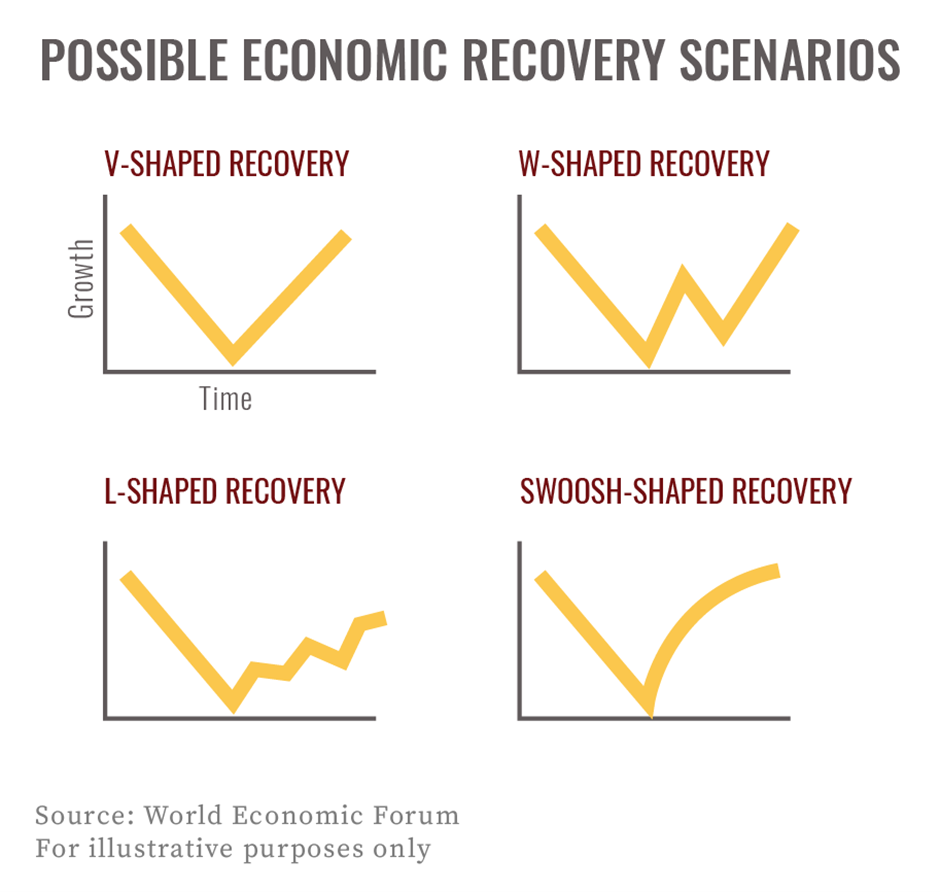
Other Types of Economic Recovery
- V-Shaped: Quick and strong recovery after a sharp decline. Represents a best-case scenario where the economy bounces back rapidly.
- U-Shaped: Longer, more gradual recovery. The economy slowly climbs out of recession, with sustained damage before improvement.
- L-Shaped: Prolonged downturn without a return to previous growth levels for a long time. Indicates a severe and lasting impact.
- W-Shaped: Also known as a double-dip recession. The economy recovers but then dips again before finally improving, indicating volatility.
FAQs on K-Shaped Recovery
What is a K-shaped recovery?
A K-shaped recovery is a scenario where different parts of the economy recover at varying rates, with some sectors rebounding quickly while others continue to struggle, leading to increased economic inequality.
Can you provide an example of a K-shaped recovery?
During the COVID-19 pandemic, industries like technology and finance experienced rapid recovery and growth, whereas sectors such as hospitality and entertainment faced prolonged challenges.
What causes a K-shaped recovery?
A K-shaped recovery is caused by differing recovery rates across various sectors and social groups, often becoming evident during economic crises like the COVID-19 pandemic.
What impact does a K-shaped recovery have on the economy?
A K-shaped recovery increases economic inequality, as wealthier sectors and individuals recover faster and grow richer, while less affluent sectors and individuals face more difficulties and setbacks.
What role should the government play in a K-shaped recovery?
The government is urged to address disparities by supporting lagging sectors and groups to ensure a more balanced and equitable recovery.
Is a K-shaped recovery good for the economy?
A K-shaped recovery is generally considered harmful as it exacerbates economic inequality, leads to widespread unemployment, and reduces purchasing power among the lower middle class, undermining overall economic health.
What are the concerns associated with a K-shaped recovery?
Former RBI Governor Raghuram Rajan has highlighted that a K-shaped recovery can worsen economic inequality and reduce medium-term growth potential.
How does a K-shaped recovery affect unemployment and purchasing power?
It leads to widespread unemployment and diminished purchasing power among the lower middle class, which can undermine consumer demand and weaken economic stability.
What challenges do SMEs face during a K-shaped recovery?
Small and Medium-sized Enterprises (SMEs) often experience financial stress and slow credit growth, which hampers their recovery and growth prospects.
What is a V-shaped recovery?
A V-shaped recovery signifies a quick and robust recovery after a sharp economic decline, where the economy rapidly bounces back to its previous growth levels.
How does a U-shaped recovery differ from a V-shaped recovery?
A U-shaped recovery is characterized by a longer and more gradual climb out of a recession, with sustained damage and a slower improvement compared to the quick rebound seen in a V-shaped recovery.
What is an L-shaped recovery?
An L-shaped recovery indicates a prolonged economic downturn without a return to previous growth levels for an extended period, signifying severe and lasting impact on the economy.
What does a W-shaped recovery entail?
A W-shaped recovery, also known as a double-dip recession, occurs when the economy recovers but then experiences another downturn before finally improving, indicating significant volatility and uncertainty.