









A recent research of scientists from China and Japan has rekindled the discussion on room temperature superconductivity, particularly focusing on the Meissner effect observed in copper-substituted lead apatite (LK-99).
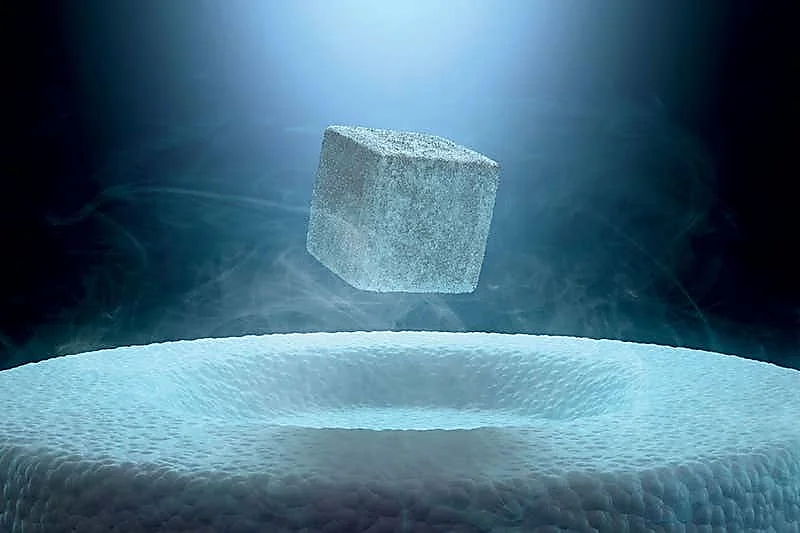
About the Meissner Effect:
- The Meissner effect is a phenomenon observed in materials that can conduct electric currents without resistance, known as superconductors.
About the Superconductivity and Superconductors:
- The Superconductivity is a state in which certain materials exhibit 0 electrical resistance and the expulsion of magnetic fields.
- The Superconductors is a material that shows Superconductivity.
- It occurs at extremely low temperatures, typically near absolute zero (0 Kelvin or -273.15°C).
Key Characteristics:
- Zero Electrical Resistance: Superconductors can conduct electric current without any loss of energy due to resistance.
- This property has implications for the development of efficient electrical systems.
- Perfect Diamagnetism: Superconductors expel magnetic fields from their interior, a phenomenon known as the Meissner effect.
- This makes them ideal for applications involving strong magnets and magnetic levitation.
Types of Superconductors:
- Type I Superconductors: These materials exhibit a sudden transition to the superconducting state and are characterized by a single critical temperature.
- Type II Superconductors: These materials have a more complex phase diagram and can exist in both normal and superconducting states over a range of temperatures. They are often used in high magnetic field applications.
Applications:
- Magnetic Resonance Imaging (MRI): Superconducting magnets are used in MRI machines to generate strong and stable magnetic fields.
- Maglev (Magnetic Levitation) Technology: Superconductors are utilized in maglev trains to achieve frictionless, high-speed transportation.
- Power Transmission: Superconductors can be used in power transmission lines to reduce energy loss during electricity transmission.
- Quantum Computing: Superconducting circuits are explored for the development of quantum computers due to their unique quantum mechanical properties.
Key highlights of the study:
- The Meissner effect can be observed in copper-substituted lead apatite.
- Many materials exhibit superconductivity at extremely low temperatures or under high pressures, limiting practical applications.
- Near-RTP (room temperature and pressure) superconductivity is observed in copper-substituted lead apatite (LK-99).
Ref: Source
| UPSC IAS Preparation Resources | |
| Current Affairs Analysis | Topperspedia |
| GS Shots | Simply Explained |
| Daily Flash Cards | Daily Quiz |