









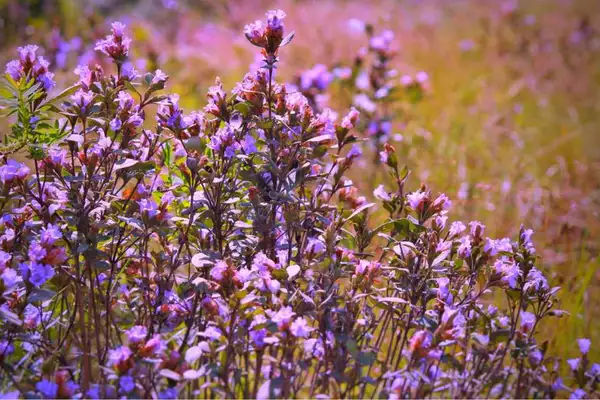
Neelakurunji flowering shrub was recently included on the IUCN (International Union for Conservation of Nature) official Red List of threatened species.

About Neelakurunji (Strobilanthes kunthiana):
- Itis a flowering shrub endemic to the high-altitude regions of southwest India.
- It is notable for its purplish-blue blooms that appear once every 12 years, with the first observation in 1832 and is a key ecological event of the Western Ghats.
- This phenomenon of mass blooming transforms the landscape into a stunning visual display and a key tourist attraction.
- This is the first ever Global Red List assessment for this flagship species of the montane grasslands of southwest India.
- The latest global assessment confirms its threatened status in the Vulnerable (Criteria A2c) category of the IUCN.
- It needs a habitat of high-altitude shola grassland ecosystems in the Western Ghats of India.
- Most of its subpopulations are located in the Nilgiris (Tamil Nadu), followed by Munnar, Palani-Kodaikanal, and Anamalai mountains, while Yercaud, Shevroy hills, in Eastern Ghats.
Ref: Source
| UPSC IAS Preparation Resources | |
| Current Affairs Analysis | Topperspedia |
| GS Shots | Simply Explained |
| Daily Flash Cards | Daily Quiz |
Frequently Asked Question:
What is Neelakurunji?
Neelakurinji is a flowering shrub endemic to the high-altitude regions of southwest India.
What is the Blooming cycle of Neelakurunji?
It is renowned for its purplish-blue blooms that appear once every 12 years.
Where are these flowers found?
Most subpopulations are located in the Nilgiris (Tamil Nadu), Munnar, Palani-Kodaikanal, and Anamalai mountains.