




NFT Or Non-Fungible Token is an asset that is tokenized using blockchain technology. Each NFT is given a distinct identification code and metadata, making it different from other tokens. In this article, you will learn definition, full form of NFT, history, how it works, fungibilty of NFT, benefits and applications, disadvantages, etc.
This article will provide key insights for GS Paper-III Economy section of UPSC IAS Exam.
Table of Content
- What is Non-Fungible Token (NFT)?
- History of Non-Fungible Tokens
- How NFTs Work?
- Blockchain and Fungibility
- How can NFT be used?
- Benefits and applications of NFT
- Disadvantages of NFTs
- Conclusion
- Frequently Asked Questions
- Reference
What is Non-Fungible Token (NFT)?
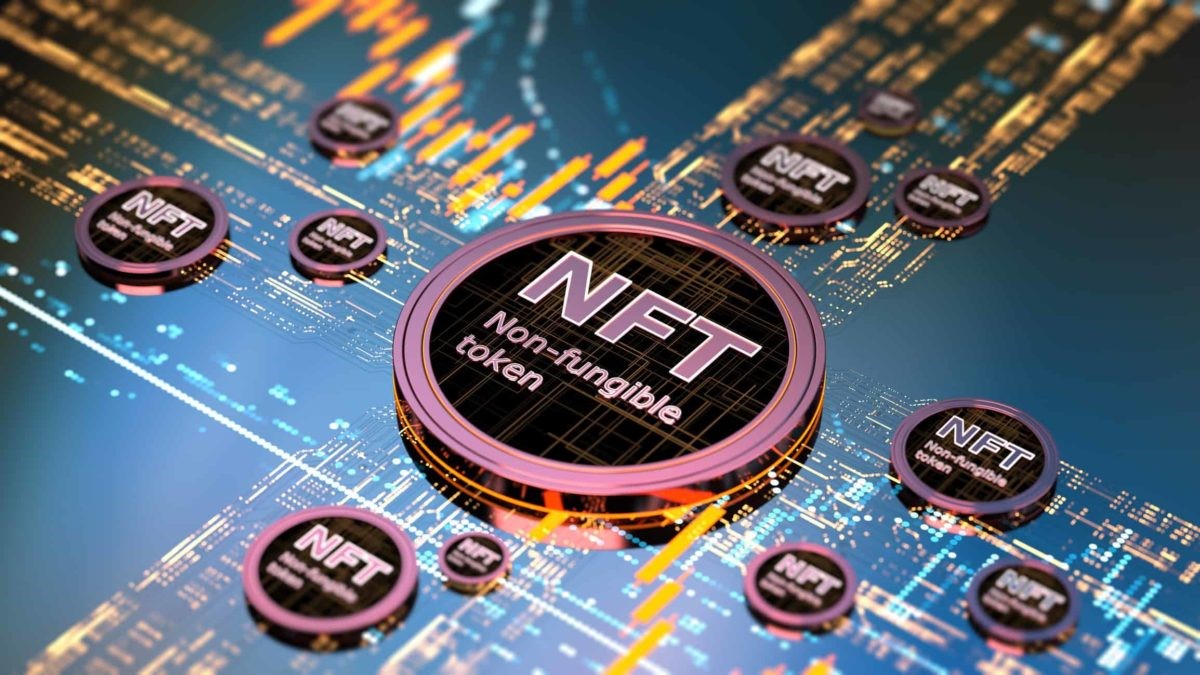
- The Non-fungible tokens (NFTs) are assets that are tokenized using blockchain technology.
- Each NFT is given a distinct identification code and metadata, making it different from other tokens.
- NFTs can be bought, sold, or traded for money, cryptocurrencies, or for other NFTs on NFT marketplace development depending on the perceived value assigned by the market and individual owners.
- Cryptocurrencies are also tokens but with a significant difference—they are fungible.
- NFT marketplace development is a blockchain-based online platform to sell and buy non-fungible tokens (NFTs).
- NFTs may appear identical, but they hold unique characteristics and so are not interchangeable with each other.
History of Non-Fungible Tokens:
- The first sale of an NFT was that of “Quantum” in 2014, designed and tokenized by KevinMcKoy on the Namecoin blockchain.
- It was later minted and sold in 2021 on the Ethereum blockchain.
- NFTs are constructed using the ERC-721 standard (Ethereum Request for Comment #721), which outlines specific rules for transferring ownership, confirming transactions, and ensuring secure transfers in applications.
- ERC-1155, was approved six months after ERC-721 to facilitate the grouping of multiple non–fungible tokens into a single contract, ultimately reducing transaction costs.
How NFTs Work?
- NFTs are created through a process known as minting, where all the relevant information of the NFT is recorded on a blockchain.
- The minting process involves creating a new block, validating the NFT information through a validator, and then closing the block.
- Smart contracts are often utilized during this process to determine ownership and manage the transferability of the NFT.
- During the minting process, tokens receive a special identifier directly linked to a specific blockchain address.
- Each token is owned by someone, and this ownership information (i.e., the address where the minted token is stored) is publicly accessible.
- Even if multiple NFTs are minted for the exact same item, each token is unique and distinguishable from the others.
Blockchain and Fungibility
- Cryptocurrencies like physical money, are interchangeable in the financial sense, allowing them to be traded or swapped with one another.
- Example: one bitcoin holds the same value as another bitcoin on a specific exchange.
- This interchangeable nature of cryptocurrencies makes them a secure medium for transactions in the digital economy.
- NFTs disrupt this crypto paradigm by bestowing uniqueness and irreplaceability upon each token, making one non-fungible token incomparable to another.
- NFTs function as digital representations of assets and can be likened to digital passports as each token possesses a distinct and non-transferable identity to set it apart from others.
- NFTs can be extended by allowing to combine one with another to generate a third entirely unique NFT.
How can NFT be used?
- Photography: Photographers can tokenize their work by offering total or partial ownership.
- Sports: Collections of digital art based on celebrities and sports personalities or their autographs.
- Trading cards: Tokenized digital trading cards, out of which some are collectibles, while others can be traded in video games.
- Utility: NFTs that represent membership or unlock benefits for a member.
- Virtual worlds: NFTs grant ownership of anything from wearables to digital property.
- Art: A generalized category of NFTs can includes every pixels of abstract art.
- Domain names: NFTs that represent ownership of domain names for the websites.
- Music: Artists can tokenize the music by granting buyers the rights the artist wants to have.
Benefits and applications of NFT:
- NFTs contributes towards market efficiency by tokenizingphysical assets which streamlines the sales process and eliminates the need for intermediaries.
- Example: NFTs representing digital or physical artwork on a blockchain enable direct connections between sellers and their target audiences, bypassing the requirement for agents, as artists can securely host their NFTs on their own.
- NFTs simplifies investment such as realestate can be tokenized by allowing properties to be divided into multiple unique sections, each priced differently and represented by an NFT.
- This can revolutionize real estate trading, by making it straightforward and less bureaucratic by incorporating relevant metadata into the corresponding NFTs.
- NFTs can serve as representations of ownership in a business, similar to stocks as distributed and secure ledger of blockchain allows NFTs to automate ownership transfer through smart contracts, by making the process seamless.
- NFTs enhance identity security by storing personal information on an immutable blockchain, which ensures protection from unauthorized access or theft.
- It democratizes investment by allowing fractional ownership of physical assets like real estate or artwork.
- This approach divides ownership into shares by making it accessible for multiple investors to participate and potentially increase the asset’s value and revenue.
Disadvantages of NFTs
- NFTs are not asset class; instead, they serve are a technological means to establish ownership.
- Due to misinformation on NFTs, the values of tokenized assets may become inflated and are subject to volatility.
- Generating NFTs consumes a significant amount of energy as the majority of NFTs rely on the Ethereum blockchain, which uses an energy-intensive operatingprotocol known as proof of work.
- A single NFT transaction requires as much electricity as the average home consumes in about a day and a half.
- To participate in NFT sales on the Ethereum platform, owning the blockchain’s native currency, Ether (ETH) is necessary.
- Investors aiming to purchase NFTs with fiat money, such as the U.S. dollar, may encounter limited options.
- NFTs may be used by unethical elements or miscreant of the society such as terrorists, smugglers among others, they may exploit the privacy related protection provided by the NFTs.
- NFTs are highly volatile and may lead to loss of domestic savings, hard earned money of people of an economy or in some conditions may destabilise the whole economy.
- NFTs may be used by money laundering like activities as they are least possible to be detected.
Conclusion
Non-Fungible Tokens (NFTs) has unique properties and ability to represent ownership and authenticity of digital content. NFTs have revolutionized the way one perceives and interact with digital art, collectibles, virtual real estate, and various other digital assets. The concept of NFTs has allowed creators and artists, allowing them to tokenize and monetize their digital creations in ways that were previously unattainable. NFTs offer a decentralized and secure platform for creators to establish direct connections with their audiences, while ensuring verifiable ownership of their digital works.
FAQs (Frequently Asked Questions)
What does NFT stand for?
NFT stands for Non-Fungible Tokens.
What is the meaning of NFT?
Non-fungible tokens (NFTs) are unique assets that are tokenized using blockchain technology. The creators of NFT can tokenize things like art, collectibles, or even real estate.
What is NFT market?
An NFT marketplace is place where trading of the Non-Fungible Tokens occurs.
Is NFT legal in India?
There are no laws presently in India that regulates the commercial dealings with the NFTs.
What is minting NFT?
The minting of an NFT means conversion of a digital data into crypto collections or digital assets recorded on the blockchain.
What is NFT Farming?
The NFT farming is the method of generating income using non-fungible tokens that has emerged due to the growth of the farming industry and a rise of interest on it.