









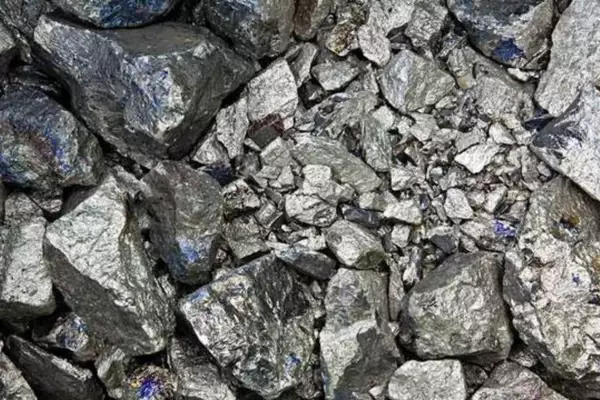
Australia’s nickel industry has been granted access to billions of dollars in federal funding as well as relief from royalty payments after a collapse in the global price of nickel that threatens thousands of jobs.
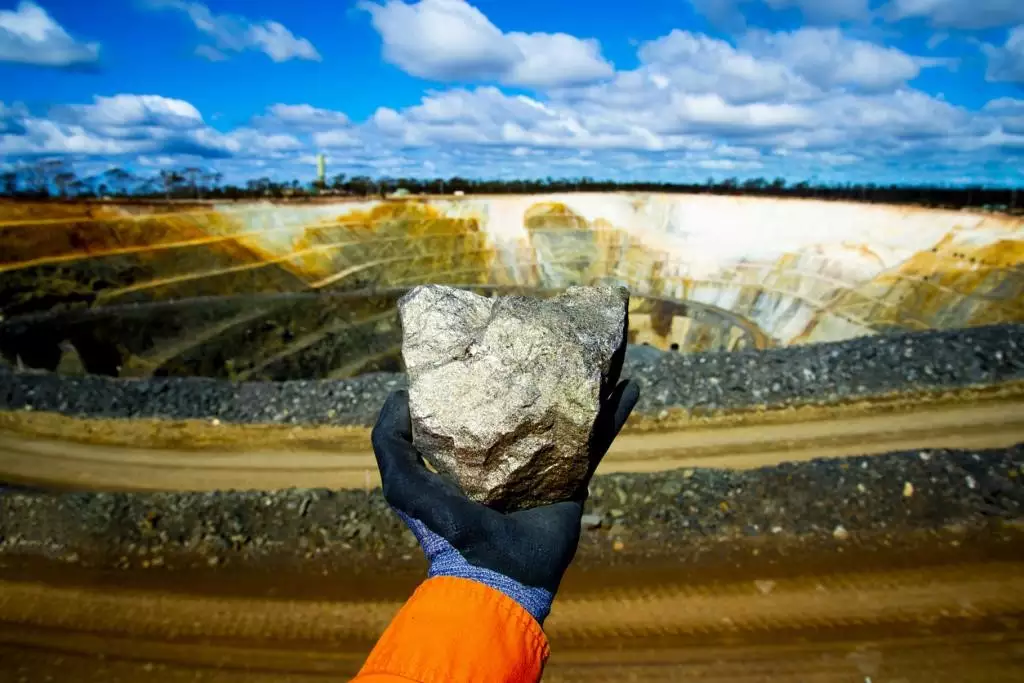
About Nickel:
- Nickel is a lustrous, silvery-white metal.
- It ranks as the fifth most common element in Earth’s crust.
- The metal has a melting point of 1,453 C.
- Pure nickel can be obtained by reducing its oxides or through the Mond process.
Properties:
- Nickel exhibits relatively low thermal and electrical conductivities.
- It has high resistance to corrosion and oxidation.
- The metal demonstrates excellent strength at high temperatures.
Applications:
- Nickel is widely used in stainless steel production.
- It is employed in various alloys to enhance specific properties.
- The metal is commonly used in electroplating processes.
Geographical Distribution:
- India: Nickel deposits are found in regions such as Odisha, Jharkhand, Nagaland, and Karnataka.
- Global: Major deposits are found in countries such as Australia, Indonesia, Brazil, etc.
Global Production Centers:
- Major production sites include the Sudbury region in Canada (considered to be of meteoric origin), New Caledonia in the Pacific, and Norilsk in Russia.
Economic Significance:
- Nickel plays a pivotal role in the production of stainless steel, constituting approximately 68% of world production.
- It is used in nickel-based and copper-based alloys, making up 10% of production.
- Nickel has a significant role in plating (9%), alloy steels (7%), foundries (3%), and various applications, including rechargeable batteries (4%).
Historical Significance:
- The use of nickel can be traced back to 3500 BCE, reflecting its historical importance.
- Axel Fredrik Cronstedt first isolated and classified it as an element in 1751.
Ferromagnetic Properties:
- Nickel is one of four ferromagnetic elements at about room temperature.
- Alnico permanent magnets based on nickel exhibit intermediate strength.
Chemical Uses:
- It acts as a catalyst for hydrogenation.
- Nickel is utilized as cathodes in rechargeable batteries.
- The metal is employed in pigments and various metal surface treatments.
Biological Importance:
- Nickel is an essential nutrient for certain microorganisms and plants that have enzymes with nickel as an active site.
Factors behind the collapse in the price of nickel:
- Oversupply from Indonesia: A significant increase in nickel supply from Chinese-owned and operated mines in Indonesia contributed to the collapse in the global price of nickel.
- China’s investments in Indonesian mines led to a substantial rise in nickel output, flooding the market.
- Global Price Trend: The global price of nickel fell from a high of US$50,000 in 2022 to just $16,400 per tonne on Monday.
- This downward trend was a response to the oversupply situation and increased competition in the market.
- China’s Dominance: China, as the largest processor of nickel worldwide, plays a crucial role in dictating global prices.
- China’s control over processing and its competitive labour market give it a significant advantage, making other suppliers price takers.
Measures to help the nickel industry survive:
- Federal Funding and Royalty Relief: The Australian government has granted access to billions of dollars in federal funding for the nickel industry.
- Miners received a temporary 50% rebate on royalties for the next 18 months whenever nickel prices are below $20,000 per tonne.
- Inclusion in Critical Minerals List: Nickel has been added to the official Critical Minerals List, allowing the industry access to grants under the A$4 billion Critical Minerals Facility.
- International Collaboration: Australia is attempting to establish alternative processing chains by entering into critical minerals partnerships with India, Japan, Korea, the United States, and the United Kingdom.
- Strategic Response: There is a need for careful consideration of potential strategic responses, such as avoiding oversupplies and navigating potential export bans on processed commodities by key trading partners.
- Investment in Processing Facilities: Consideration of the creation of a large processing facility to service multiple mines, ensuring Australian-sourced and processed critical minerals adhere to higher environmental, social, and governance (ESG) standards.
- Long-term Planning: Recognizing the complexity of the issue, the government is working on a comprehensive, long-term response to ensure the sustainability of the nickel industry.
Ref: Source
| UPSC IAS Preparation Resources | |
| Current Affairs Analysis | Topperspedia |
| GS Shots | Simply Explained |
| Daily Flash Cards | Daily Quiz |