









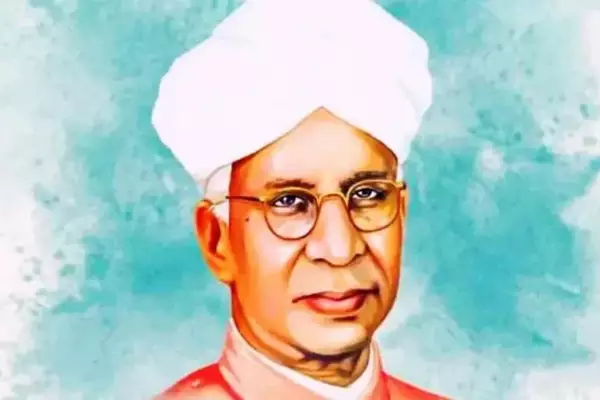
The National Teachers Day was celebrated recently in honor of Dr. Sarvepalli Radhakrishnan, for his role in education in India.
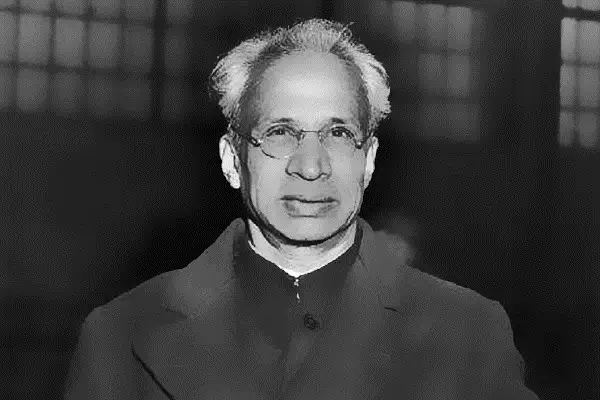
About Dr. Sarvepalli Radhakrishnan:
Early Life and Education:
- Dr. Radhakrishnan was born in a humble Brahmin family in Thiruttani, Tamil Nadu on 5th September, 1888.
- His early education was in local schools, where he showed remarkable academic prowess.
- He graduated from the Madras Christian College with a degree in Philosophy, where he excelled in his studies and began to develop his interest in philosophical inquiry.
- He passed away on April 17, 1975, in Chennai, at the age of 86.
Career and Influence:
- His philosophical work primarily focused on Indian philosophy, comparative religion, and ethics.
- He sought to reconcile Eastern and Western philosophical traditions, highlighting the relevance of Indian thought in a global context.
- His major works include:
- Indian Philosophy, a comprehensive study of the philosophical traditions of India,
- The Philosophy of the Upanishads, explores the ancient texts of Indian philosophy,
- Eastern Religions and Western Thought (1939), it enriches the intersections between Eastern philosophical traditions and Western intellectual traditions.
- In addition to his Vice-Chancellorships, he was also a professor at several prestigious institutions, including the University of Oxford, as the Spalding Chair of Eastern Religion and Ethics.
- He was also nominated 27 times for the Nobel Prize, which included 16 nominations for the Nobel Prize in literature, and 11 for the Nobel Peace prize.
- During his lifetime, he was felicitated with several awards including the Templeton Prize, Order of Merit, and Bharat Ratna in 1954.
Political and Diplomatic Roles:
- As India’s ambassador to the Soviet Union, he played a crucial role in strengthening diplomatic ties between India and the Soviet Union during the early years of India’s independence.
- His tenure as India’s First Vice President and later as the 2nd President of India (1962-67) was marked by promotion of education and values of democracy & social justice.
- He led the Indian delegation to UNESCO and was elected Chairman of UNESCO’s executive board in 1948.
Educational Reform and Advocacy:
- Dr. Radhakrishnan was a strong advocate for educational reform and believed in the importance of developing a holistic education system that emphasizes moral and ethical values.
- His vision for education was centered around nurturing critical thinking and creativity, and he emphasized the role of teachers as key facilitators in this process.
- Dr. Radhakrishnan’s birthday, September 5, is celebrated as Teachers’ Day in India, reflecting his deep respect for the teaching profession and his belief in the transformative power of education.
- He is considered one of the foremost scholars of Indian philosophy in the 20th century.
- His efforts in promoting a global dialogue between Eastern and Western philosophies have contributed to a greater appreciation of Indian thought in international academic circles.
Ref: Source
| UPSC IAS Preparation Resources | |
| Current Affairs Analysis | Topperspedia |
| GS Shots | Simply Explained |
| Daily Flash Cards | Daily Quiz |
Frequently Asked Question:
What is the significance of Teacher’s Day in India?
Teacher’s Day in India is celebrated on September 5th each year, marking the birthday of Dr. Sarvepalli Radhakrishnan, honoring teachers and their contributions to education and society.
When did Dr. Radhakrishnan serve as the President of India?
Dr. Sarvepalli Radhakrishnan served as the President of India from May 1962 to May 1967.
What is Dr. Radhakrishnan’s legacy in Indian politics?
In addition to his role as President, he was a member of the Constituent Assembly and played a role in shaping the Indian Republic’s values and principles.
What honors and recognitions did Dr. Radhakrishnan receive?
Dr. Radhakrishnan received numerous honors and recognitions for his contributions to philosophy and education, including the Bharat Ratna, India’s highest civilian award, in 1954.